PP vs. Aluminum Sun Loungers: Choose for the Operating Model
Compare complete lounger assemblies, handling routines and repair options rather than choosing a poolside product from its frame material alone.
Start with the daily work
The right sun lounger is the one that fits the way a property operates. A busy pool deck may need repeated cleaning and rearrangement. A private terrace may prioritize a particular visual language and cushion experience. A seasonal resort may spend significant effort moving and storing its furniture.
Those differences should be written into the brief before choosing between polypropylene and aluminum. Neither material name is a complete answer. Compare the assembled product and the work your team will perform around it.
What to examine on a PP design
For a polypropylene design, review the frame geometry, seat support, joints or fixing points, feet and adjustment mechanism. Ask which formulation and relevant performance information apply to the specific model and intended environment. Do not infer outdoor suitability, load capacity or service life from the letters PP alone.
Where the design uses a mesh surface, include the mesh and its attachment in the evaluation. A comfortable frame with a difficult-to-replace seat surface may create a different ownership experience from one with an agreed replacement process.
What to examine on an aluminum design
For an aluminum lounger, look beyond the visible frame color. Ask about the frame construction, connection details, surface preparation, finish and hardware. Inspect areas where staff grip, lift or stack the unit and where moving parts meet the frame.
Aluminum does not make an assembly maintenance-free. The operating environment still matters, and a finished lounger contains more than its main metal. Ask how the supplier expects the complete product to be cleaned, checked and repaired in your property.
Compare handling with a real sample
Have the team move a sample through the actual service route. Check the doorways, storage entrance, floor protection and the space needed for any specified stacking arrangement. Ask for the unit weight and stacking instructions; do not assume that every design in either material stacks or moves the same way.
Then test ordinary use: getting on and off, operating the backrest and cleaning accessible surfaces. Use an agreed, relevant acceptance procedure. An improvised overload demonstration is not a substitute for product-specific evidence.
Treat maintenance as part of the specification
Compare the parts that can be replaced, the tools required and the information needed to reorder them. Record mesh, cushion, foot and mechanism references where applicable. A short list of standard finishes may simplify future matching, but confirm compatibility for the exact model.
Include the maintenance and storage tasks in the comparison. The strongest material choice is often the one your staff can manage consistently, not the one with the most persuasive single claim in a brochure.
Use a model comparison, not a material slogan
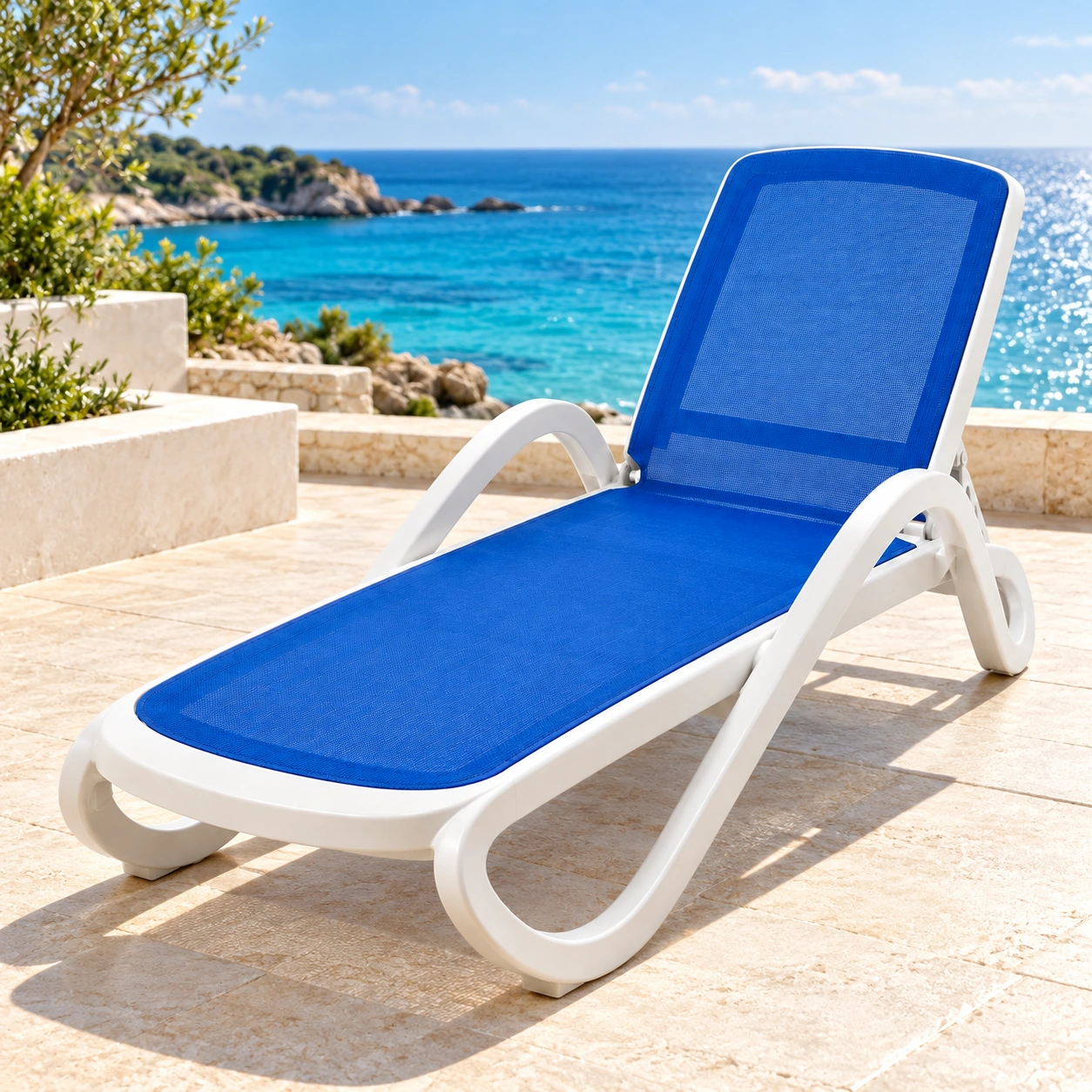
SUNNY Furniture SN-TY01 is listed with a PP frame, Textilene mesh, dimensions of 193 × 69 × 35.5 cm at the lowest position and a net weight of 12.4 kg. Those are useful starting facts for planning handling and space; they do not establish a universal load rating or a predicted lifespan.
Shortlist an aluminum alternative from the lounger collection and ask for a comparison using the same operating brief. Confirm the delivered configuration, reports, care method and replacement scope. The decision should explain why the selected model fits this pool deck, this team and this purchasing plan.
Discuss your project
Discuss your project specification ↗Model reference: SN-TY01
Frame: Polypropylene (PP); Sun lounger: 193 × 69 × 35.5 cm (Lowest position).
View SN-TY01 specifications →