One Container, Multiple Outdoor Zones: Plan the Mix Before Ordering
A mixed container works best when quantities, carton data, zone labels and receiving priorities are planned together.
A container is a delivery plan, not just a volume target
A hotel rarely buys for only one outdoor activity. The pool needs lounging, the terrace needs dining, and smaller corners may need compact leisure seating. Bringing those needs into one purchasing plan can be useful, but a mixed container should not become a collection of unrelated last-minute additions.
Start with the property's zones and the furniture schedule. Then work toward a loading plan. Filling unused space is a secondary objective; delivering the right quantities, configurations and identifiable cartons is the primary one.
Count usable configurations rather than loose pieces
Create a zone schedule with the selected model, quantity and configuration. Where a set contains several components, list what constitutes one complete set. Include cushions, tables, bases and other items only where they are part of the agreed scope.
That discipline prevents a common planning mistake: treating a carton count or a chair count as proof that an area can be furnished. Ask the supplier to reconcile the item schedule, packing list and loading proposal so the receiving team can identify what is required for each usable arrangement.
Use actual packing information
Request carton dimensions, gross weight, carton count per product or set, and any specified packing orientation or stacking restrictions. Ask how fragile surfaces, hardware and loose accessories will be protected and identified.
Do not calculate a reliable loading quantity from the furniture's display dimensions alone. Nor should a theoretical volume total be treated as a final container plan. The actual cartons, handling requirements and loading arrangement need supplier and logistics review. A small reduction in nominal fill can be sensible if it protects the approved goods and makes receiving practical.
Coordinate readiness across product lines
A mixed shipment connects the readiness of several products. Track sample approval, finish confirmation, production status and packing information by model. Make substitutions visible; a changed tabletop or base can affect both the configuration and the packing plan.
Ask which decisions must be complete before the proposed dispatch date can be confirmed. Keep the delivery conversation separate from a simple production-day count. Port movement, customs, onward transport and the site's receiving window all need their own planning and responsible parties.
Design the labels for the team that will unload
A receiving team should be able to identify a carton without opening every box. Agree a labeling format using model, component, quantity, carton sequence and project zone where required. Link loose hardware and accessories to the correct item.
Then review site access and storage. If products are needed in a particular order, discuss what is feasible in the loading and unloading plan. A loading photograph can support the record, but it does not replace an accurate packing list or the receiving checks needed to find shortages and damage.
No minimum order is flexibility, not a packing specification
SUNNY Furniture's FAQ states that there is no minimum order quantity and that different products can be mixed in a full container. This gives buyers room to build a project-specific assortment. It does not mean that every combination has identical unit costs, packing efficiency or dispatch arrangements.
Send a model-and-quantity schedule with the destination and required delivery window. Ask for the configuration, carton data, loading proposal and trade scope together. The strongest mixed order is one that the buyer, supplier, forwarder and hotel receiving team can all understand before the container is closed.
Discuss your project
Discuss your project specification ↗Model reference: SN-HYCZ01
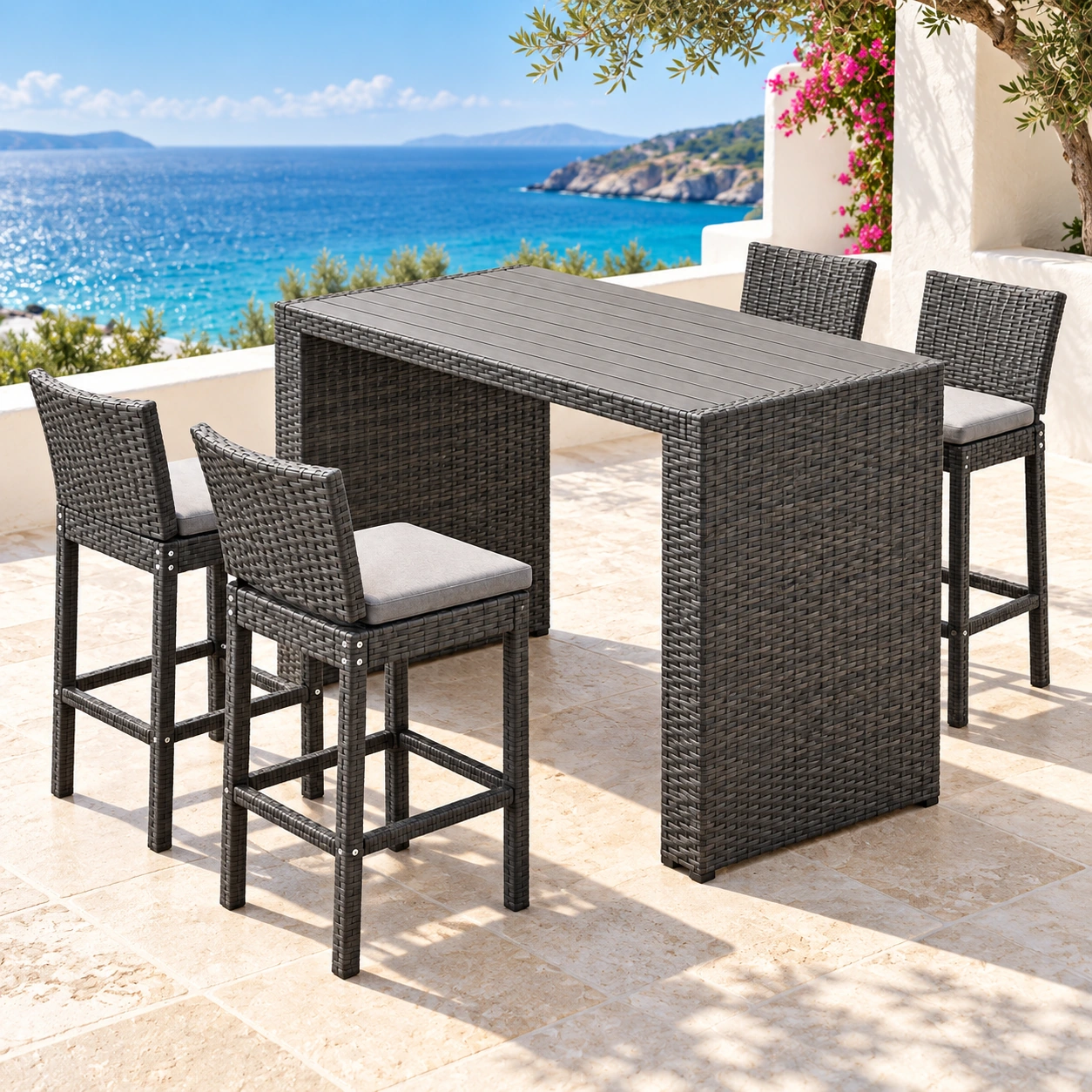
Materials & specifications: Aluminum alloy · PE rattan; Dining table: 150 × 72 × 106 cm.
View SN-HYCZ01 specifications →